I’ve come to realize over the past couple years that I’m regressing, going backwards in life. No, not in the sense that I’m becoming more barbaric or anything like that, simply that my interests seem to be leaning away from the more fantastic elements toward their more basic antecedents. I find myself more and more enthralled with the beginnings of things and not their most developed versions.
Most of you reading or listening to this blog are all too aware of my obsession with fortifications. Wherever I go, my camera seems to seek out and find those ancient and medieval constructions designed and built for the purpose of defense. Whether in Italy, Germany, India, or Japan, I am drawn to these places like a magnet and generally drag my poor wife with me to one fortress after another after another.
I’ve documented here on this website a large number of Japanese and Okinawan castles, Chinese walls, and Korean fortresses, and you can see them in the photo galleries. Yet the longer I do this, the more time I spend chasing these elegant and beautiful constructions, the more I’m finding myself seeking out and walking the earthen versions that proceeded those photogenic stone structures. Like any deep-seated interest, I can’t really explain why I find them so fascinating, I just know that I do, and if anything, the desire to visit as many as I can is getting stronger as I get older.
I know what you’re thinking. He’s getting old. Charging up mountains to see the 90% of Korean and Japanese fortifications built high on rocky crags no longer holds the appeal it once did. And while I’ll admit, the climbs have gotten more painful over the years, I still seek out those places and make those hikes, taking no little pleasure in the realization that so few people will.
Yet I’m starting to see a real beauty in the pre-masonry constructions of Korea and Japan, and have been visiting more and more of those sights recently, not as a substitute for the others, but in addition to them. A way, perhaps, to better understand how the grander, later fortifications came to be.
If you go back far enough in time, before masonry technology became widespread in this corner of the world, the only fortifications one might encounter throughout all of Northeast Asia were of rammed earth and wooden construction. Visit the reconstructed walled village at modern Buyeo in Korea or the archaeological site at Yoshinogari, Japan and you find virtually identical methods used to secure the populations therein. Rammed earth walls—and moats—further protected by wooden stockades and towers. The resemblance between those found on the Korean Peninsula and in Western Japan is incredible. All the more so since these fortifications are dated somewhere around 300 BC.
By the time the Three Kingdoms era of Korean history emerged in the first centuries AD, the technology of rammed earth construction was reaching its pinnacle. The high clay content in the Korean soil made it a durable construction material when systematically compacted and left out in the sun to dry. The earthen constructions took on the properties of ceramics, but with a mass that negated the brittleness found in, say, a teacup or saucer. These were walls made of tightly compacted and sun-dried clay, and many have survived the ravages of time for nearly two millennia.
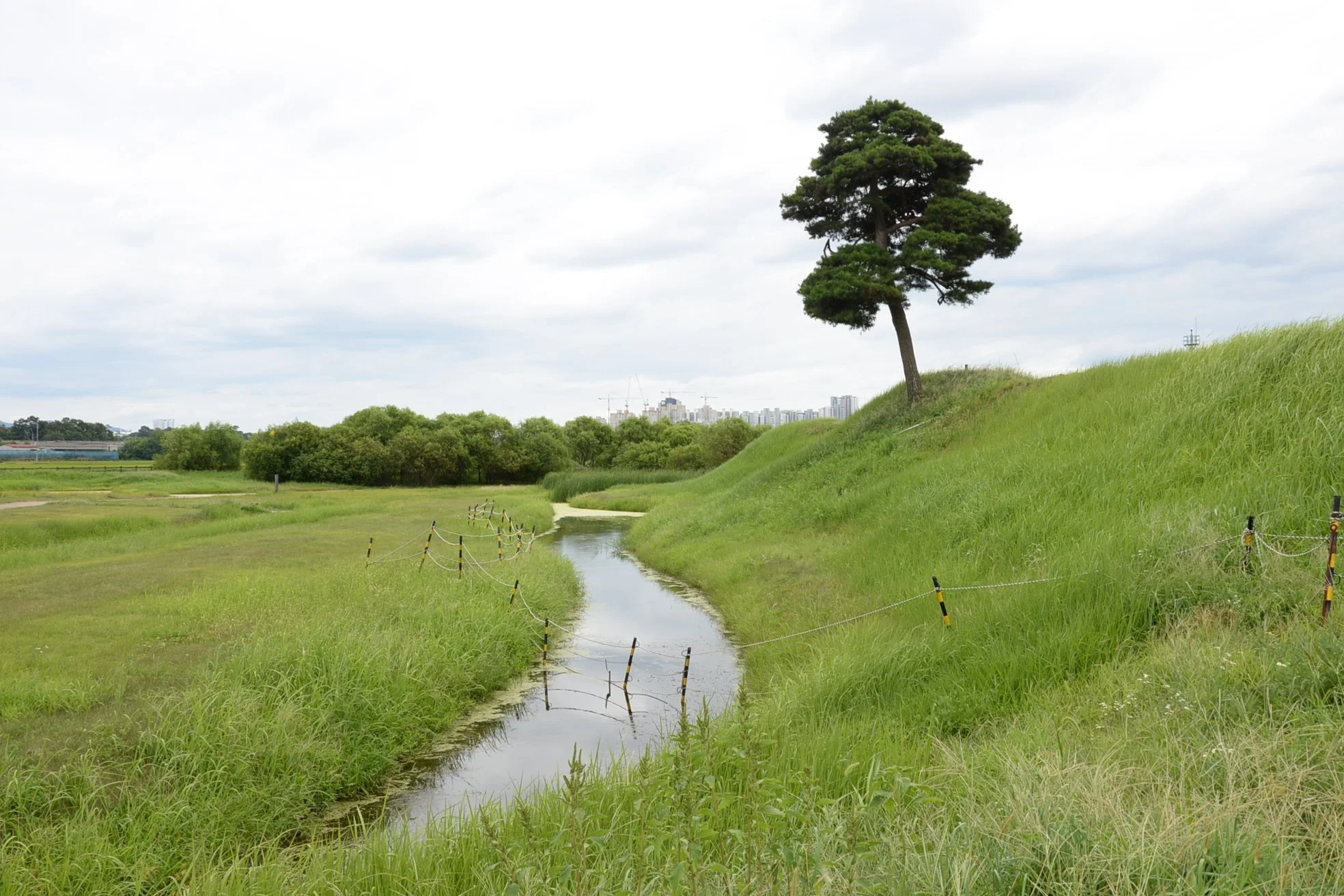
Cheongbukdong Toseong, Cheongju
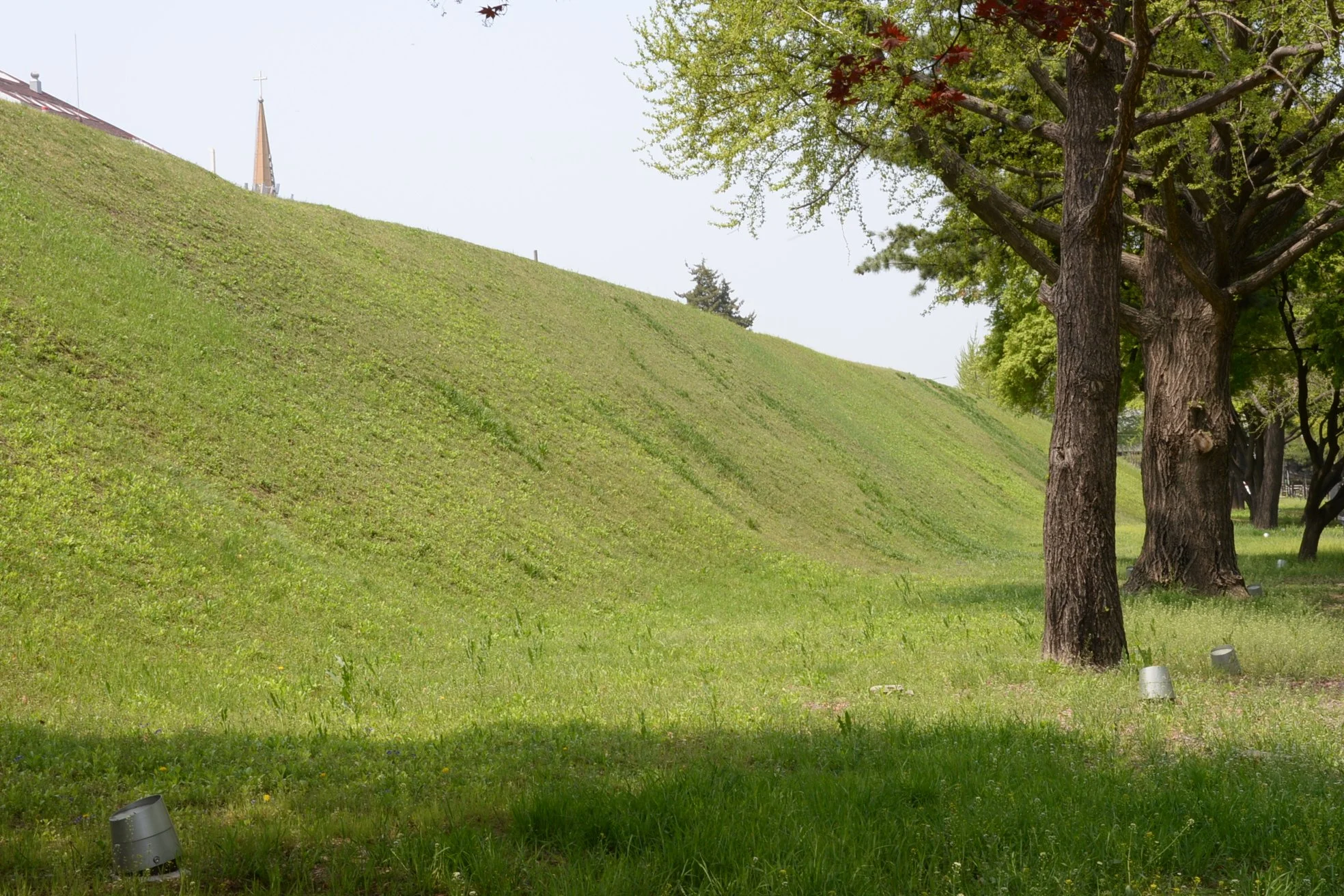
Wiryeseong’s Pungnap Toseong, Seoul
This method of construction protected the first truly impressive royal residences in Goguryeo, Baekje, and Silla with surviving rammed earth walls, or toseong, found still today in such disparate locations as Pyeongyang, Seoul, Cheongju, and Gyeongju. Many of the original toseong in Korean history were later upgraded with an outer layer of stonework, especially during the Japanese invasions at the end of the 16th Century. But some were considered so impressive, so formidable, that they were left as they were.
These simple, earthen fortifications have withstood not only the test of time but proved their worth in combat as well. The most famous such example took place in 1593 when 2,300 Korean soldiers, partisans, and civilians held off over ten times their number of Japanese at the earthen fortress of Haengju Sanseong, just west of modern Seoul, inflicting horrible casualties upon the invaders and forcing them to withdraw. An 800-year-old fortress, without any stone walls or towers, held off nine consecutive assaults over the course of one long, bloody day, becoming one of the most famous battles in all of Korean history.
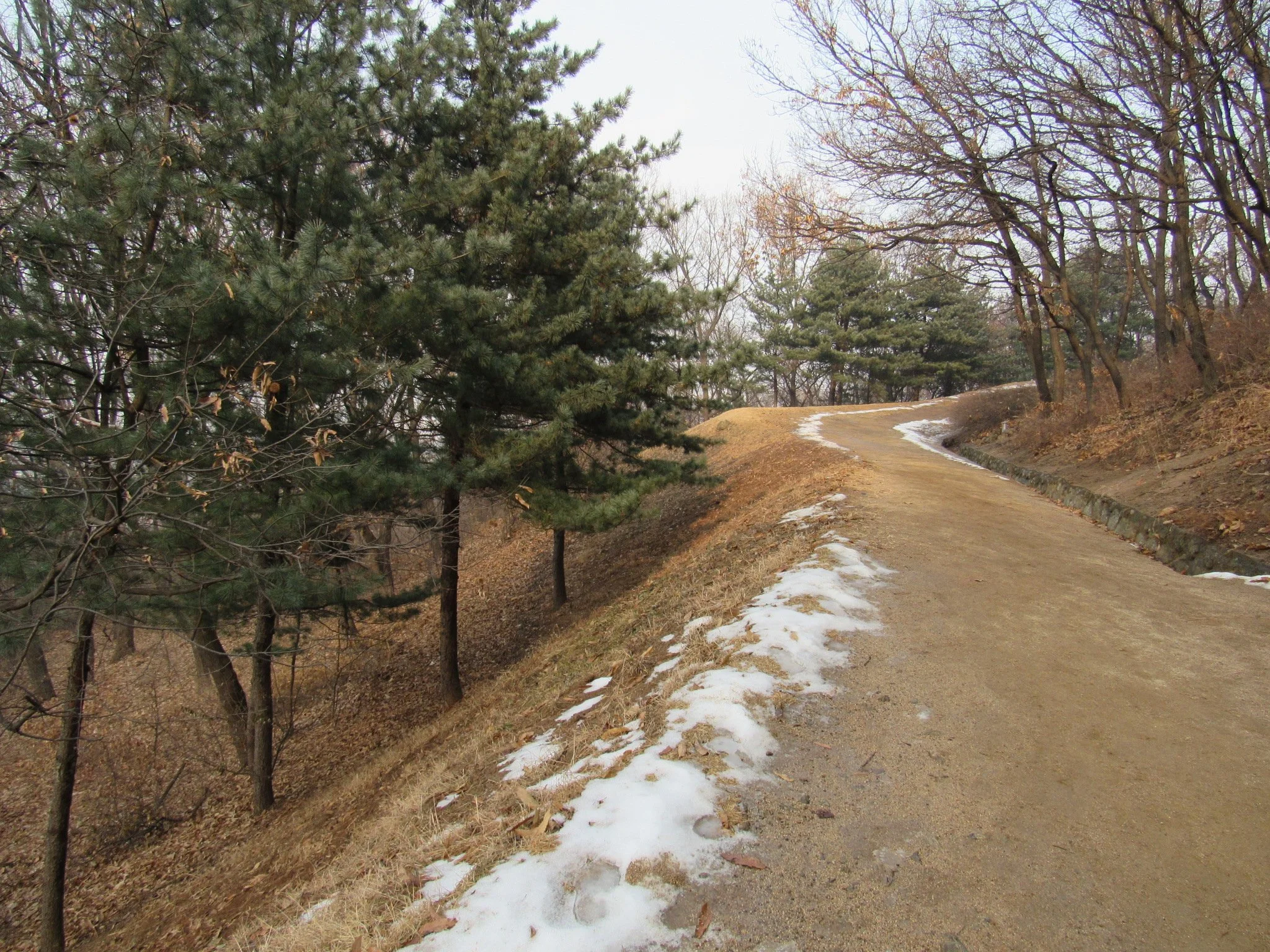
Haengju Sanseong, Gyeonggi Province
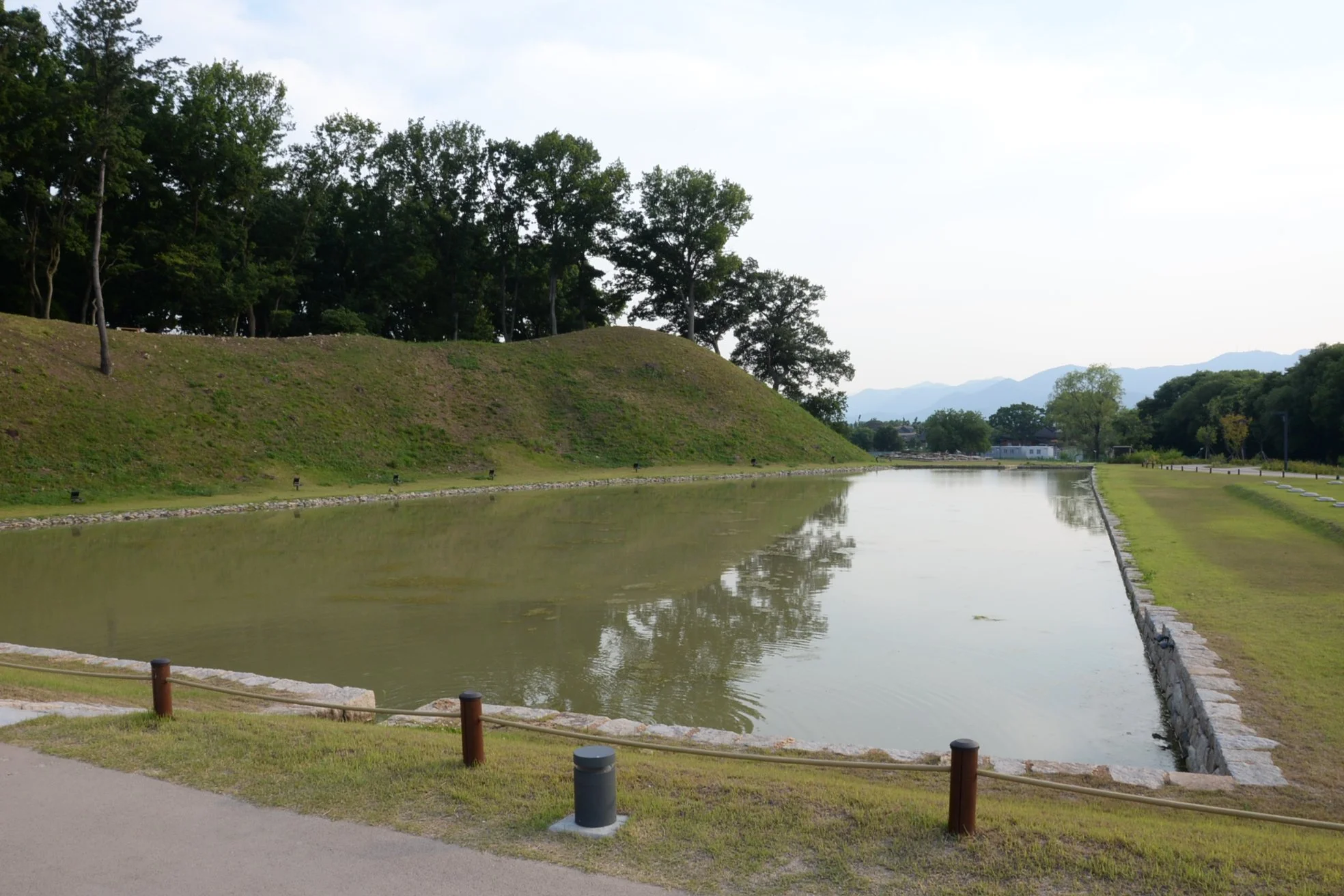
Wolseong, Gyeongju
During the Mongol invasions of the 13th Century, the entire Goryeo court relocated to Ganghwa Island, just west of modern Seoul. There, the army built earthen fortifications along the shore to ward off Mongol attack. Those walls, quickly built, and with nowhere near the durability of the centuries old toseong of previous eras, remained intimidating enough that the mighty Mongols, conquerors of Asia and much of Europe, declined to even try taking the island. In fact, so concerned were the Mongols with those dirty fortifications that their dismantlement became a primary demand when peace was finally negotiated.
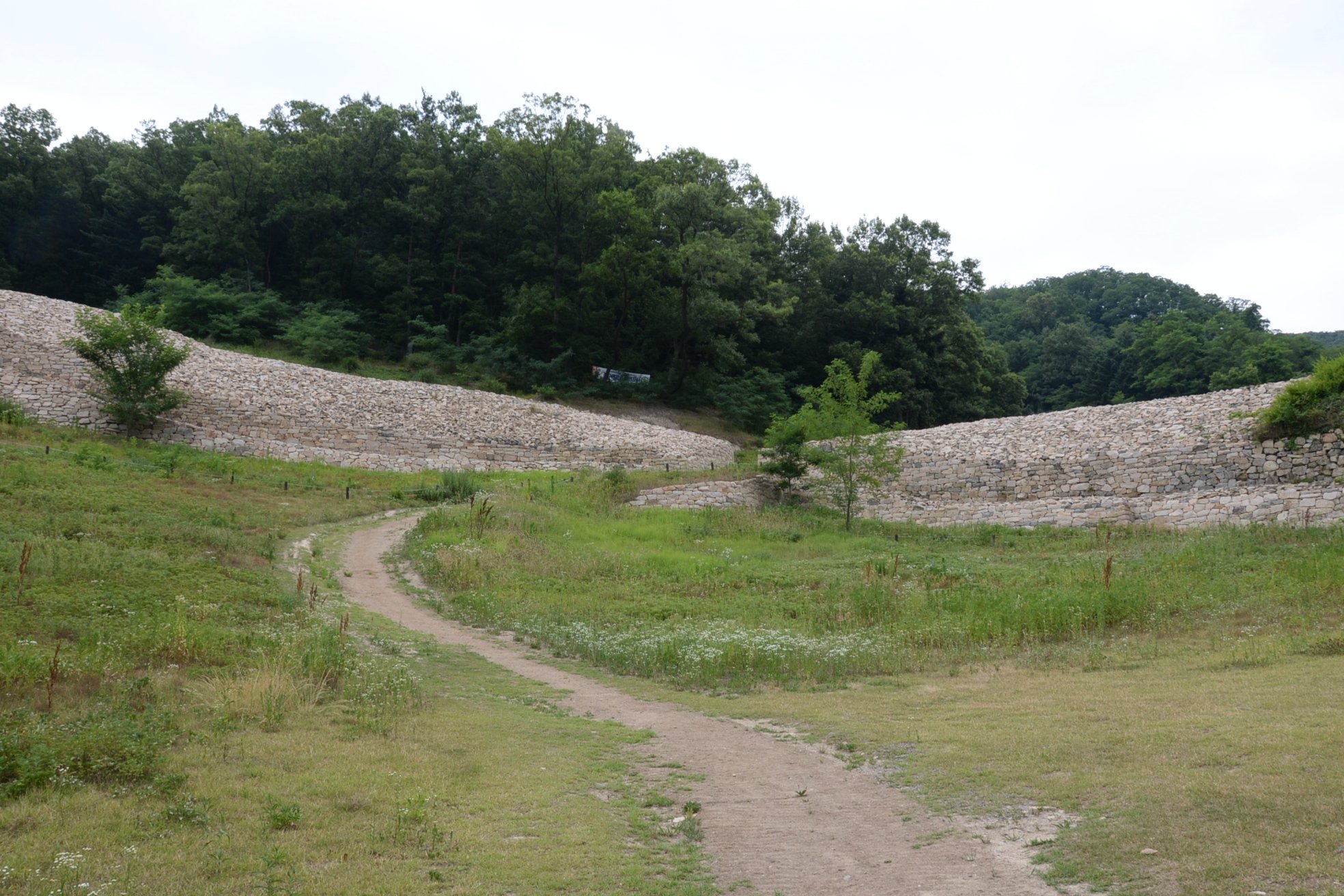
Myeonghwalseong, originally a Silla toseong, upgraded with stone in 551 AD
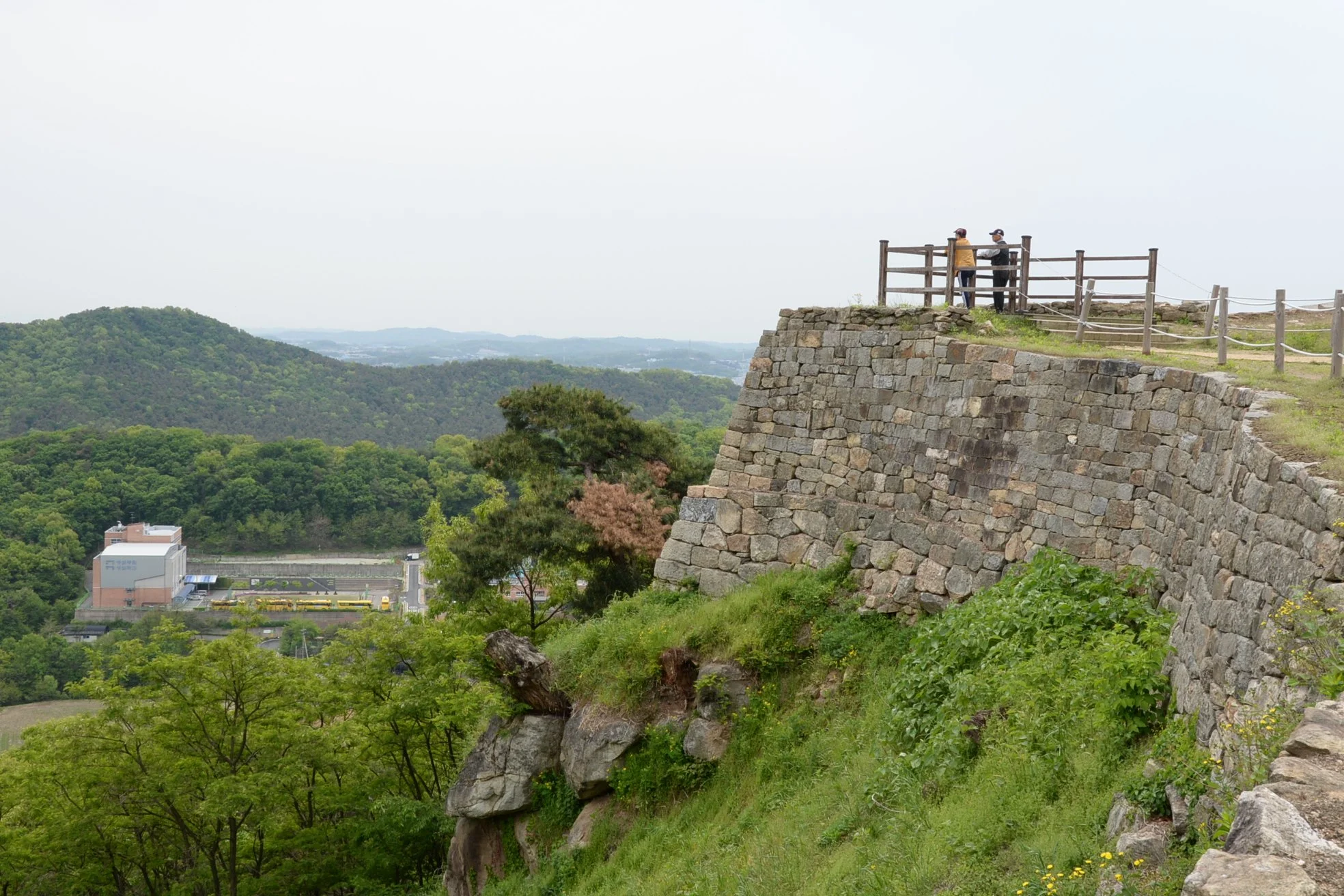
Doksanseong, still a toseong when the Japanese besieged it in 1591, girded with stone 1593-98
I find this fascinating, and most interesting of all when considered in the wider context of military history. As cannon became more prevalent in the west, armies and nations there moved away from the heavy masonry construction favored since Assyria and Babylon fought over Mesopotamia. What did they move to? Earthen ramparts which could absorb the cannon balls fired at them in ever greater numbers by increasingly sophisticated enemies.
China’s elegant Great Wall, the beautiful terrain-hugging ramparts of Korea’s Namhansansong and Suwon Hwaseong, the soaring keeps of Osaka and Himeji castles, all had their genesis in the dirty walls of a bygone era. China’s original great wall, built by the Qin Dynasty in the 3rd Century BC was of rammed earth design, the wall as we conceive of it today built by the Ming Dynasty nearly 1,500 years later. Baekje’s fortification of its original capital in Seoul, called Wiryeseong, remains visible today, just a stone’s throw from the 1988 Olympic Park. Just as beautiful and visible, the earthen walls of Wolseong Fortress in Gyeongju, surrounding the royal palace of Silla, protected the architects of Korea’s first unified state.
These are ancient reminders of what our ancestors could achieve, despite a lack of modern understanding of science and construction methodology. And in an age of urban potholes that seem impossible to fill, where bridges fail and overpasses collapse, I find it simply incredible that these ancient constructions—and those of other, distant civilizations—have withstood the test of time, enduring into the modern, cell-phone and internet infused era.
Dirt, simple dirt, pressed down hard and left out in the sun to dry, has outlasted some of the modern world’s most fantastic designs. And I can’t help it, I find that really cool!
M. G. Haynes